High-conversion landing pages for SaaS organizations
A landing page is where you’ll put your core offer in an interesting and attractive manner. It is one of those few pages that will bring in more revenue. Apart from converting leads into customers, a landing page also puts you on the map of different search engines, such as Google and Bing.
In a sense, it hits two birds with one stone. For starters, it creates a smooth transition for potential customers who have been nurtured from the first stage of marketing (with top-of-the-funnel content). Second, it also attracts new potential customers who are well-aware of their pains. The second batch is often looking for a platform that can solve their pain points.
(reach out if you want to implement this)
Elements of an effective SaaS landing page
1. High-quality copy explaining what you do
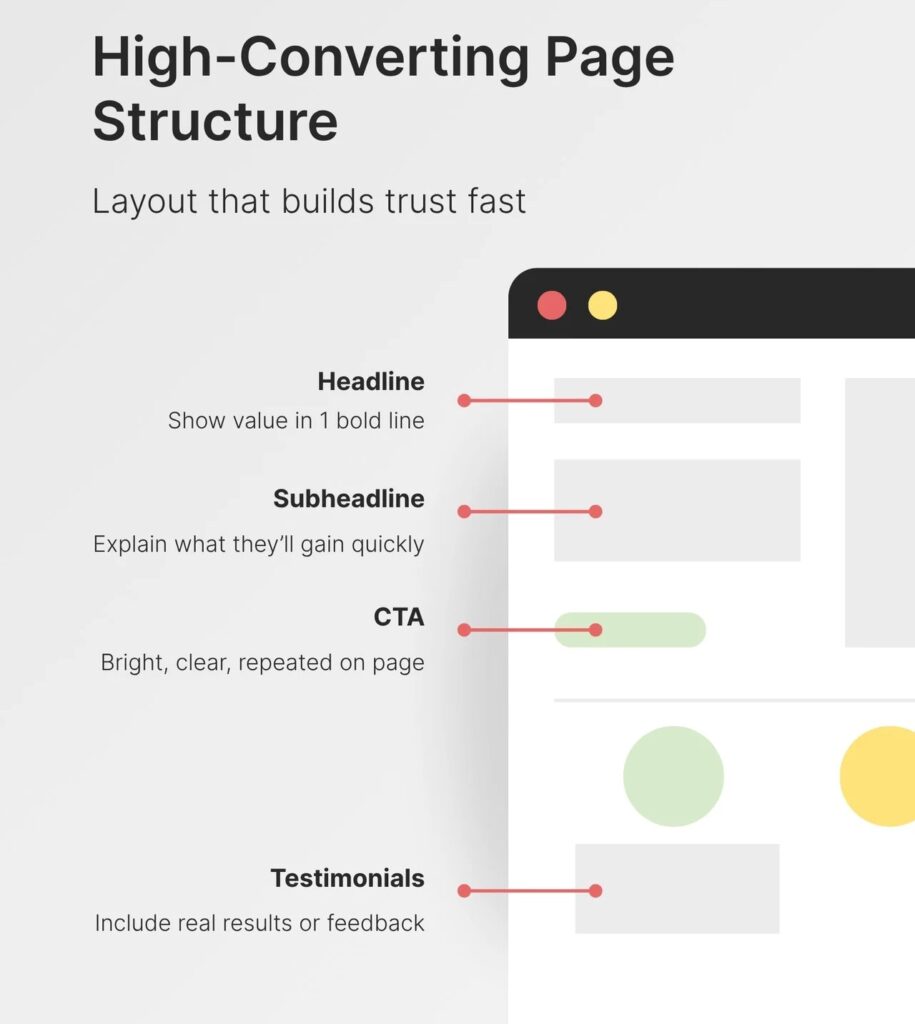
Before we dive deeper into the high-quality copy, your landing page should have a main bold header that can convey your core offer immediately. Your site visitors should have a clue of what you are offering as soon as they open your landing page—the first 10 seconds of scrolling through your page. Bold headers make it easier for you to capitalize on this.
Let’s say you have an SaaS platform for editing photos that’s backed with AI functionalities, your bold header should read this:
- Edit your brand photos with the latest AI functionalities to attract more customers
If you have an SaaS platform that streamlines workflows, your main header needs to convey an important message like this:
- Save time on traditional workflows with automated flows
A short message introduces your SaaS to potential customers within seconds and captures attention, too.
While bold headers will briefly explain your core offers, high-quality copy will break down your core offer at a deeper level.
With high-quality copy, it becomes much easier to convert leads into customers and even rank high on search engines.
This is how a landing page puts you up there on Google’s search results: most users who search for certain queries on Google are looking for solutions, and your landing page offers a core solution that solves some of these problems.
The trick here is to know the problem your potential customer might be facing. After that, tailor your landing page to present the solution.
If your potential customers are stuck with traditional workflows that take a lot of time, your landing page needs to be centred around automated workflows that save time. So, basically, it’s more about finding a solution and a keyword that pierces through search engines such as Google and Bing.
You are basically helping them solve the issue by presenting a solution that works well.
Since a landing page is a cocktail of everything, the copy should be concise and short, backed up with the right intent—conversion. Highlight the solution in a brief and friendly manner.
Each copy section requires a CTA button that urges your potential customers to take a certain action. Present the solution to their pain point and back it up with a CTA button.
Remember to provide links to other blog posts that go deeper into what is mentioned in your copy for those who want to research.
2. Testimonials
Testimonials are social proof. You are basically telling your potential customers that “you walk the talk.” It shows the results that others have achieved and motivates new leads to take action.
It inspires others to take a certain action that will help them achieve such results. While middle-of-the-funnel testimonials are often long-form content, bottom-of-the-funnel testimonials are quite short.
A short paragraphed testimonial from your customers describing how they solved a certain issue and how long it took them to solve it will do the trick. Take the ‘before’ and ‘after’ perspective. This highlights how a certain problem was a pain and how your software solved the issue. Focus on key metrics your potential customers might be looking for, such as increased revenue, automated workflows, and easier management.
3. Reviews on different platforms
Testimonials complemented by reviews on established platforms, such as G2, Trust Radius, and Capaterra, will put your software on the map. Apart from improving social proof, such reviews will boost your site’s SEO.
Here’s the thing: Google trusts websites with high domain authority.
If you are wondering what domain authority is—it basically refers to the authority a website has based on how much Google trusts it. Websites that are well-established with high organic traffic have a high domain authority because so many people visit them to get reviews.
You can capitalise on this by featuring your software on such platforms.
Since review websites have a high domain authority, reviews on these sites can boost your visibility on search engines. So, what is trusted by the review website (including your software platform) will be trusted by Google.
Reddit can also improve your SERPs (search engine result pages) ranking with reviews. Since Google is slowly evolving, Reddit is one of the few forums that provides human reviews, and it’s now prioritized by Google. Once your software is featured on Reddit, your website will have higher chances of ranking higher on Google. Human-based reviews mean that your software is trusted by many—this makes Google trust your website too.
4. Call to action
A call to action is literally what it sounds like—it urges customers to take action. It can be a button or a link that redirects users to the payment page or cart page.
The main aim of a landing page is to convert leads into customers. CTAs often make it easier for you to do this. With that said, CTAs should be placed after every section—on intros, on the body, and at the bottom of the landing page.
For instance, if you have an intro that’s backed up by high-quality copy, the section should conclude with a CTA that urges users to take action.
If you are offering different packages, your CTA button should be below the features. It’s always worthwhile to highlight the type of organisation/business that will benefit from each package. This makes it easier for potential customers to choose a plan or package that suits them.
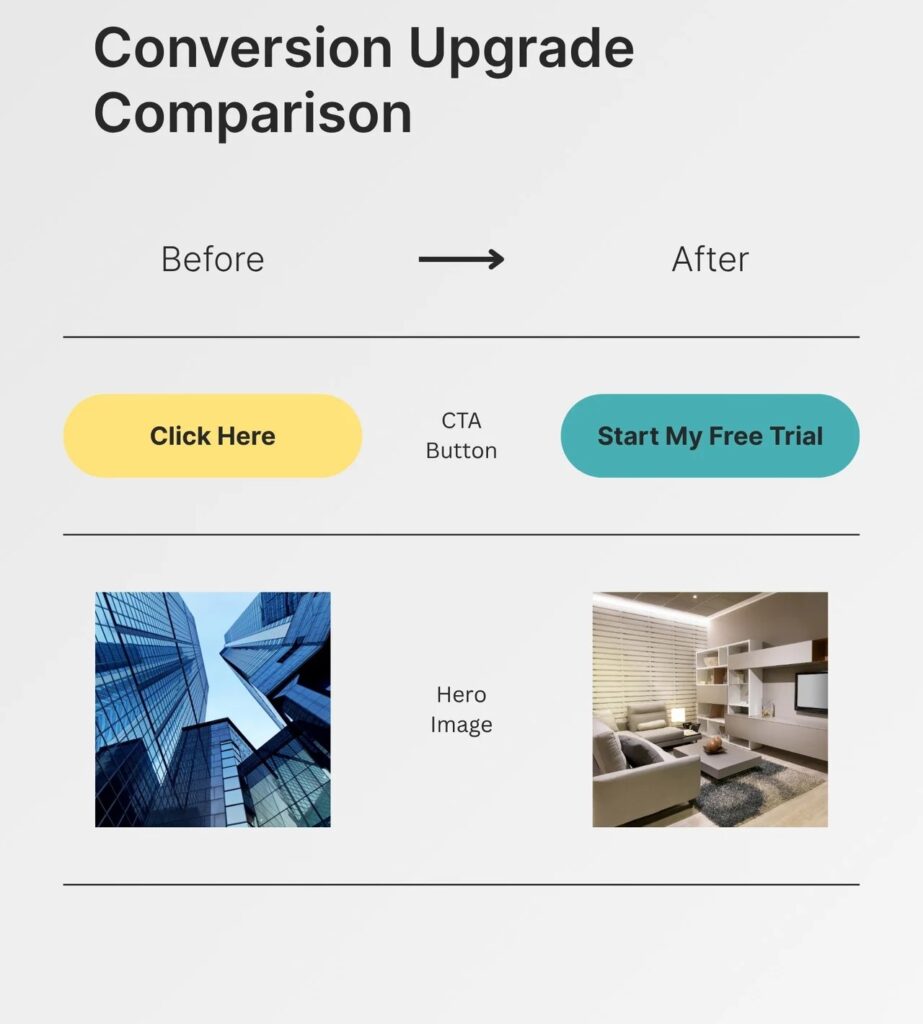
To make your CTAs more intriguing, opt for something that focuses on the solutions you are offering. For software organisations offering automated solutions, a CTA that reads ‘automate your business’ presents a solution while urging customers to take action. In short, the CTA should highlight the solution the customer will benefit from.
Over To You
With a landing page, it becomes quite easy to convert leads into customers. It presents your core offer and also highlights how life will turn out once certain problems are solved.
Testimonials from customers and ratings on review sites will go a long way in boosting your SERP ranking. They are also quite effective in showing your potential customers that your software is the real deal.